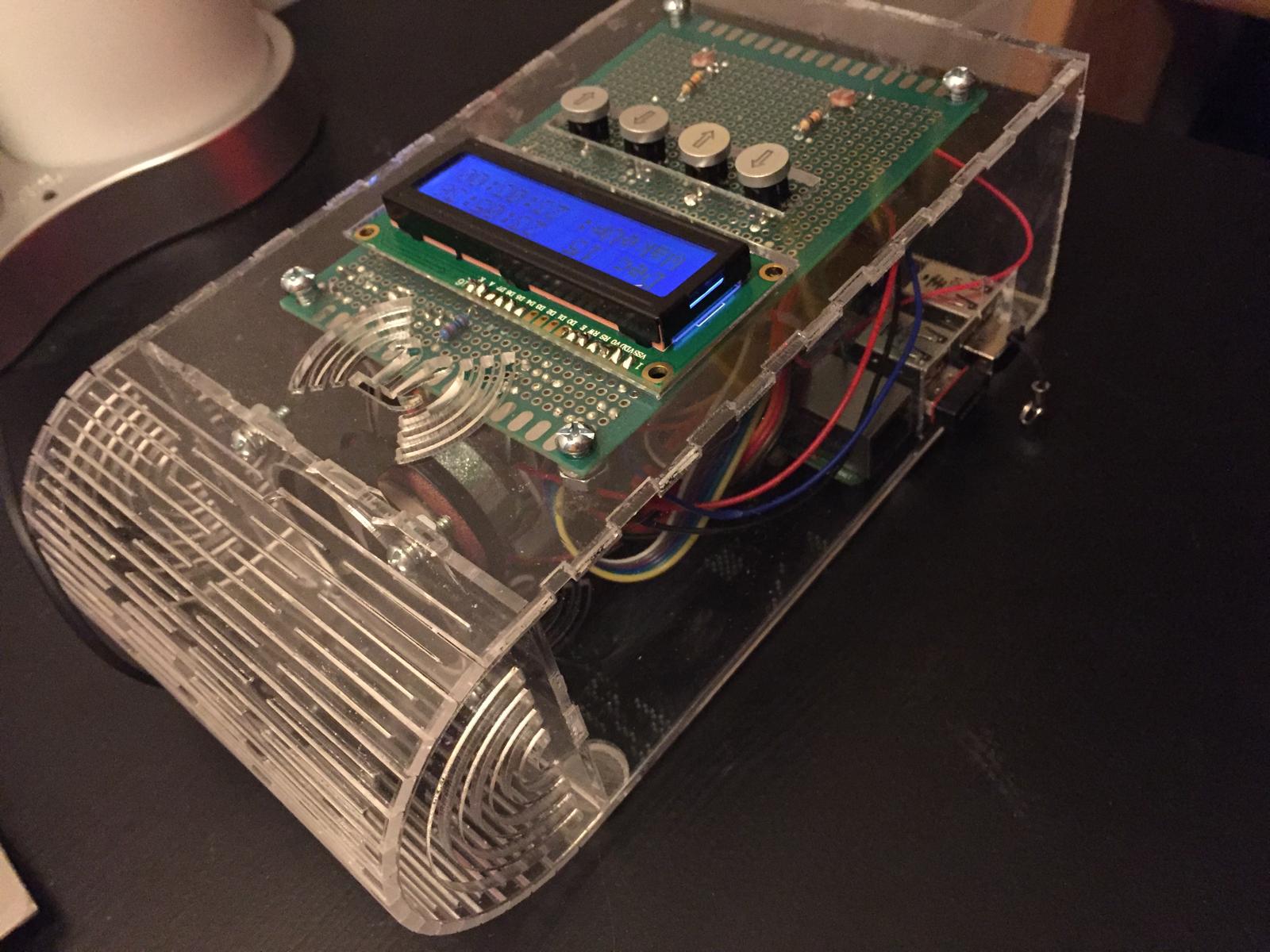
In 2015, while living in Novato, I built a special alarm clock. It started as a fun side project to help me wake up in the morning — and became my first end-to-end product.
How it worked
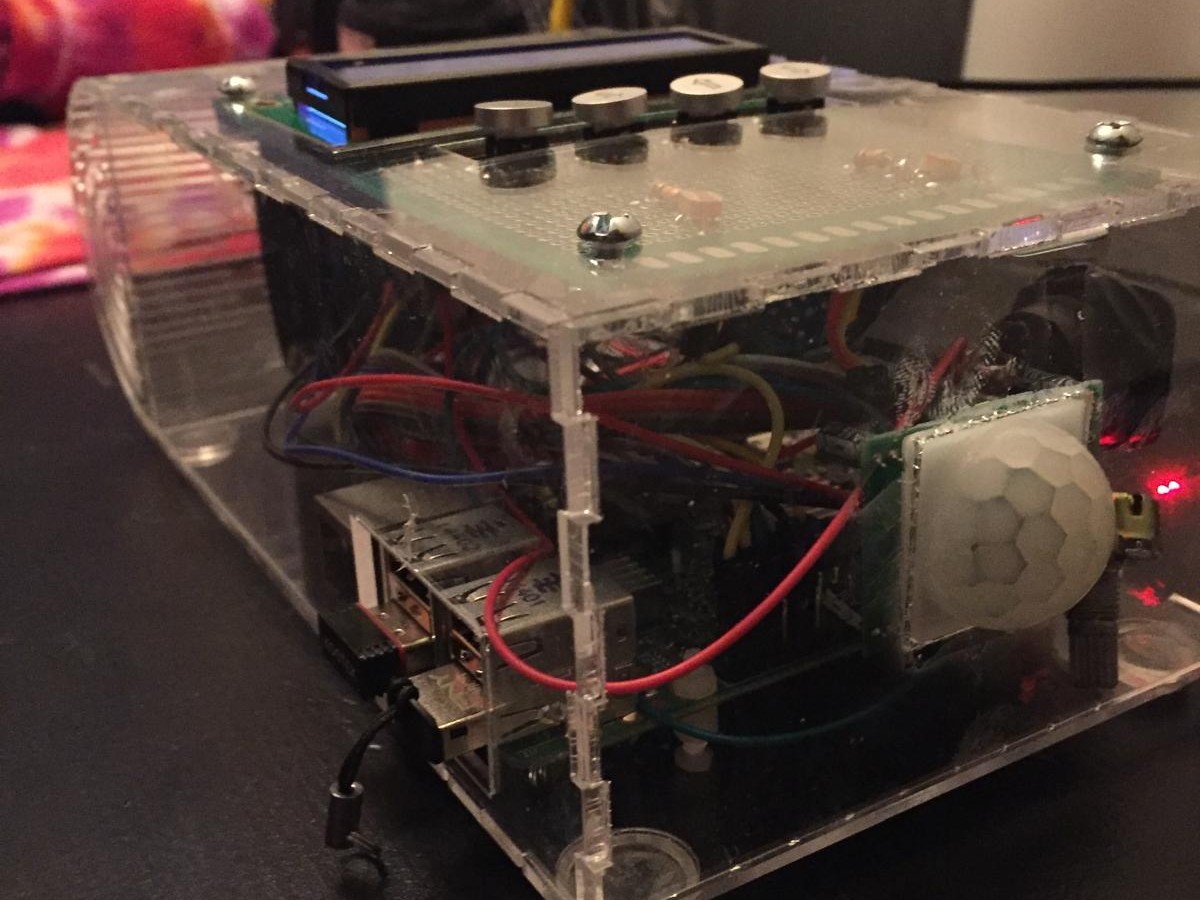
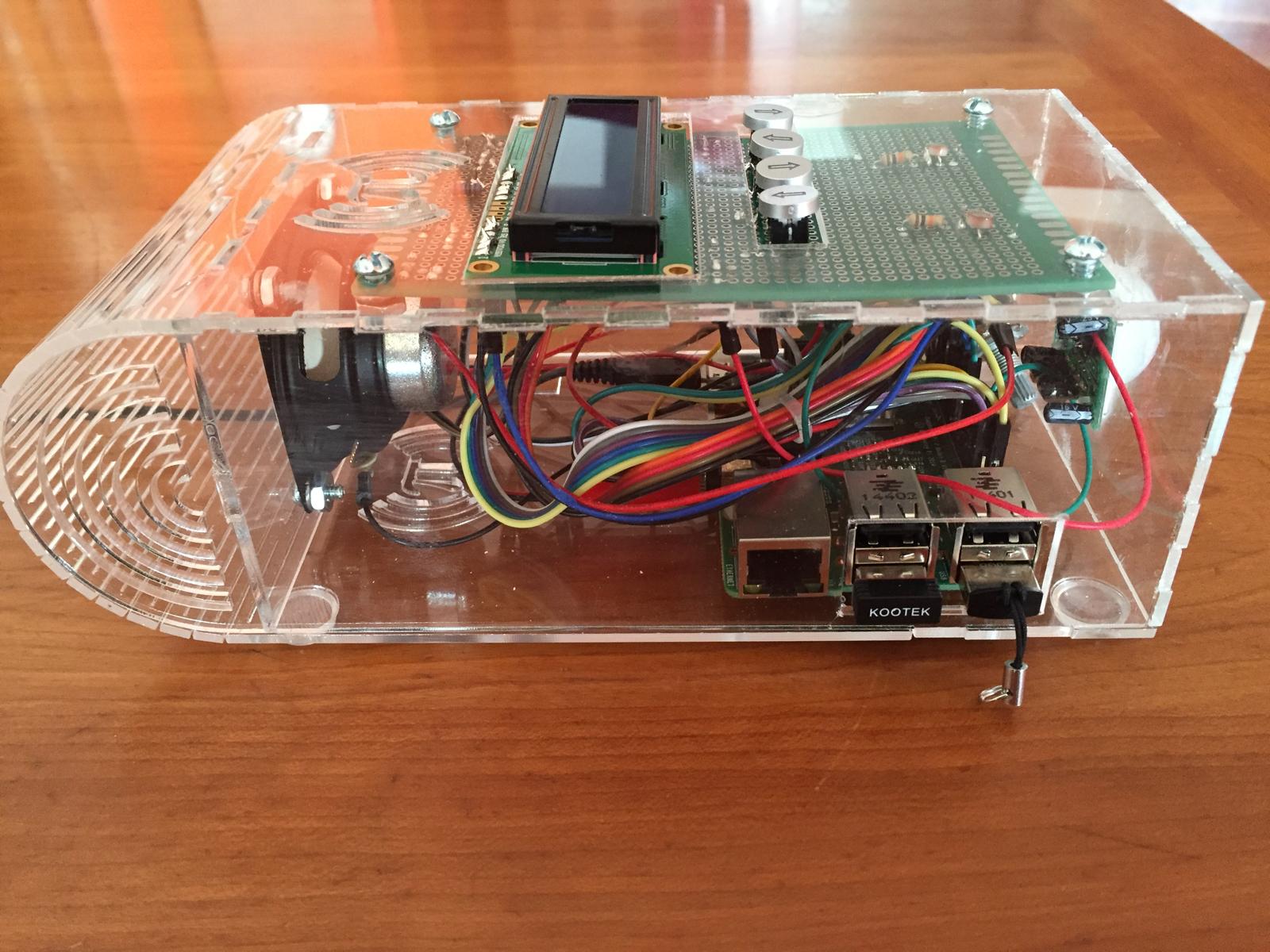
At the core, it used a Raspberry Pi "programmed" in Python (I promised myself that one day I will look at that code again, but I'm quite scared of what I could find). I had nearly no idea of what I was doing, nor how it all actually worked — but with the help of random people on the Web, my host dad, and Mr. Corey, I managed to build my first end-to-end product.
The playlist
I wanted to start the day inspired by my favorite songs, so I designed the alarm to play a random song out of a list of my favorites, uploaded via a USB stick. I started with a few songs by Eminem, J. Cole, and Kanye West, but eventually the playlist took an interesting twist, and suddenly I was waking up every day with either:
- Steve Jobs' Think Different ad
- The Great Dictator's final speech
Nothing more motivational than those to start the day in the right way.
Snooze with the light, stop on your feet
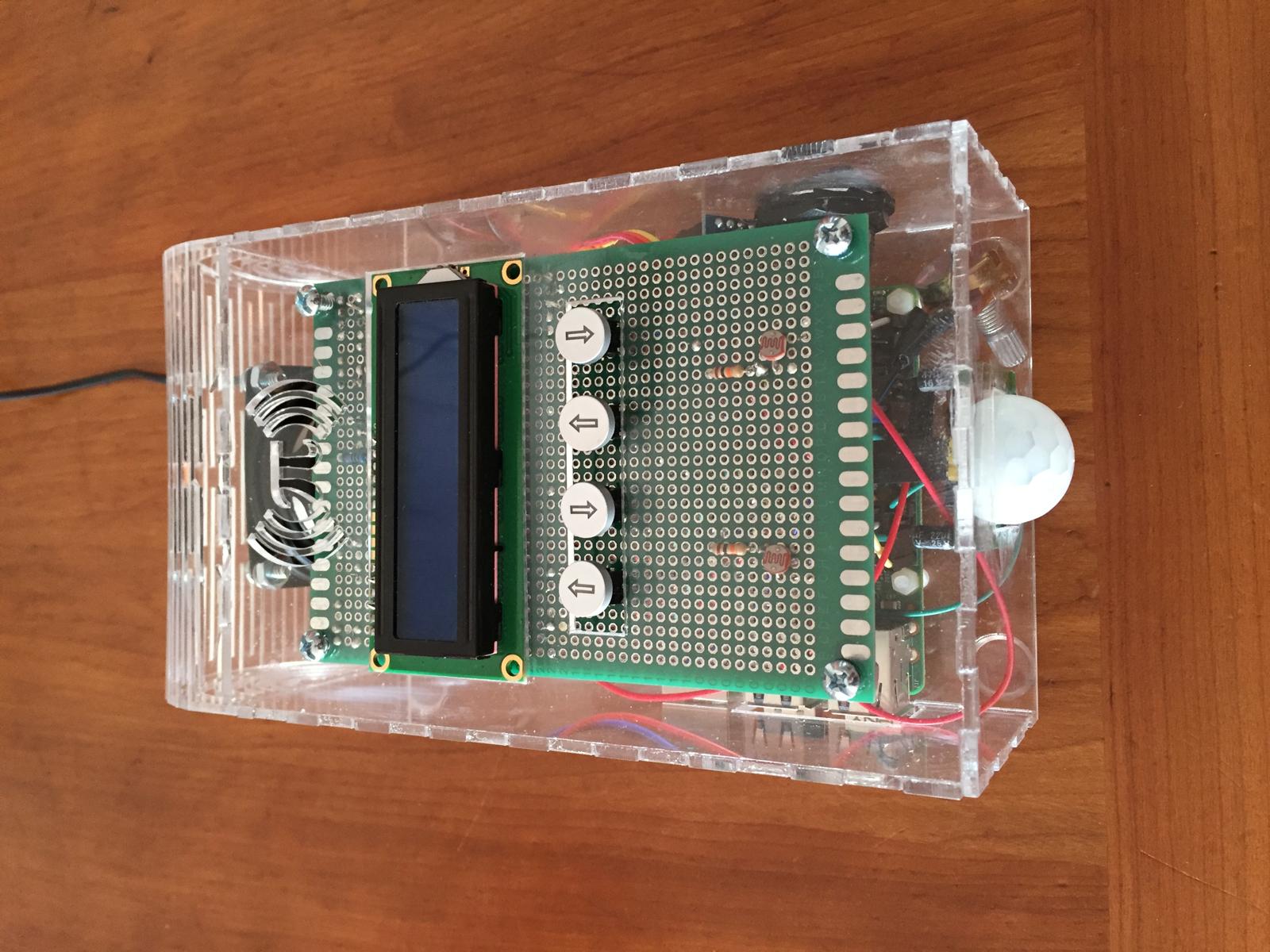
The most special thing about the project were the two mechanisms to snooze and stop the alarm, using photoresistors and a motion sensor.
Once the alarm went off, I could snooze it simply by switching on the light (the light switch of my room at my host family's house was nicely positioned right next to my pillow). Once the alarm went off a second time, the only way to stop it was to actually stand up from the bed and walk in front of the motion sensor. I had positioned the alarm far away, so that in order to stop it I actually had to get out of bed — but thanks to the photoresistors, I was given at least one chance to snooze it for a few more minutes of rest.
It was designed to work just for me, and I fucking loved it.
How it came to be
It all started with a Raspberry Pi, a breadboard, a few sensors, and a handwritten sketch of the circuits.
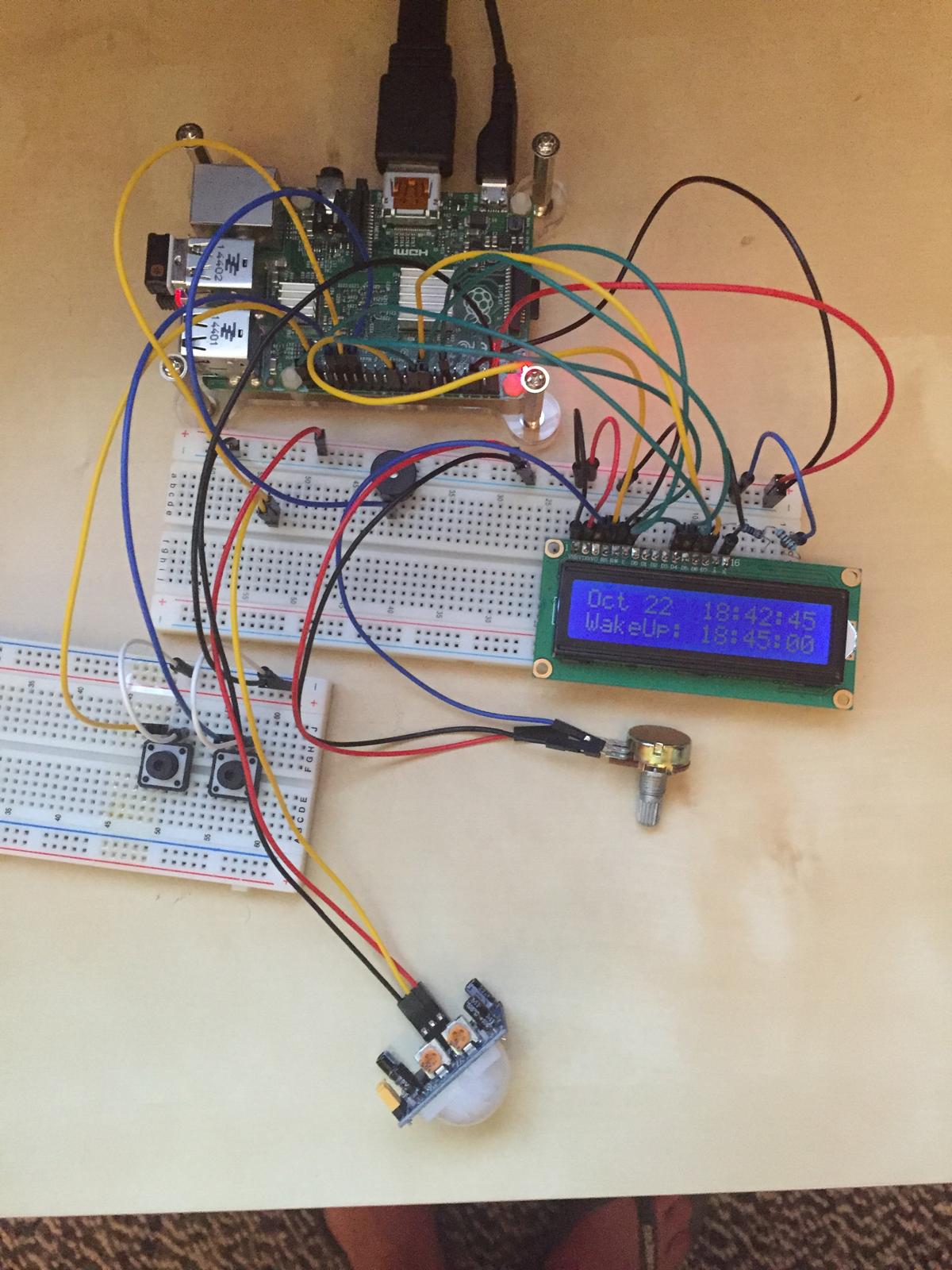
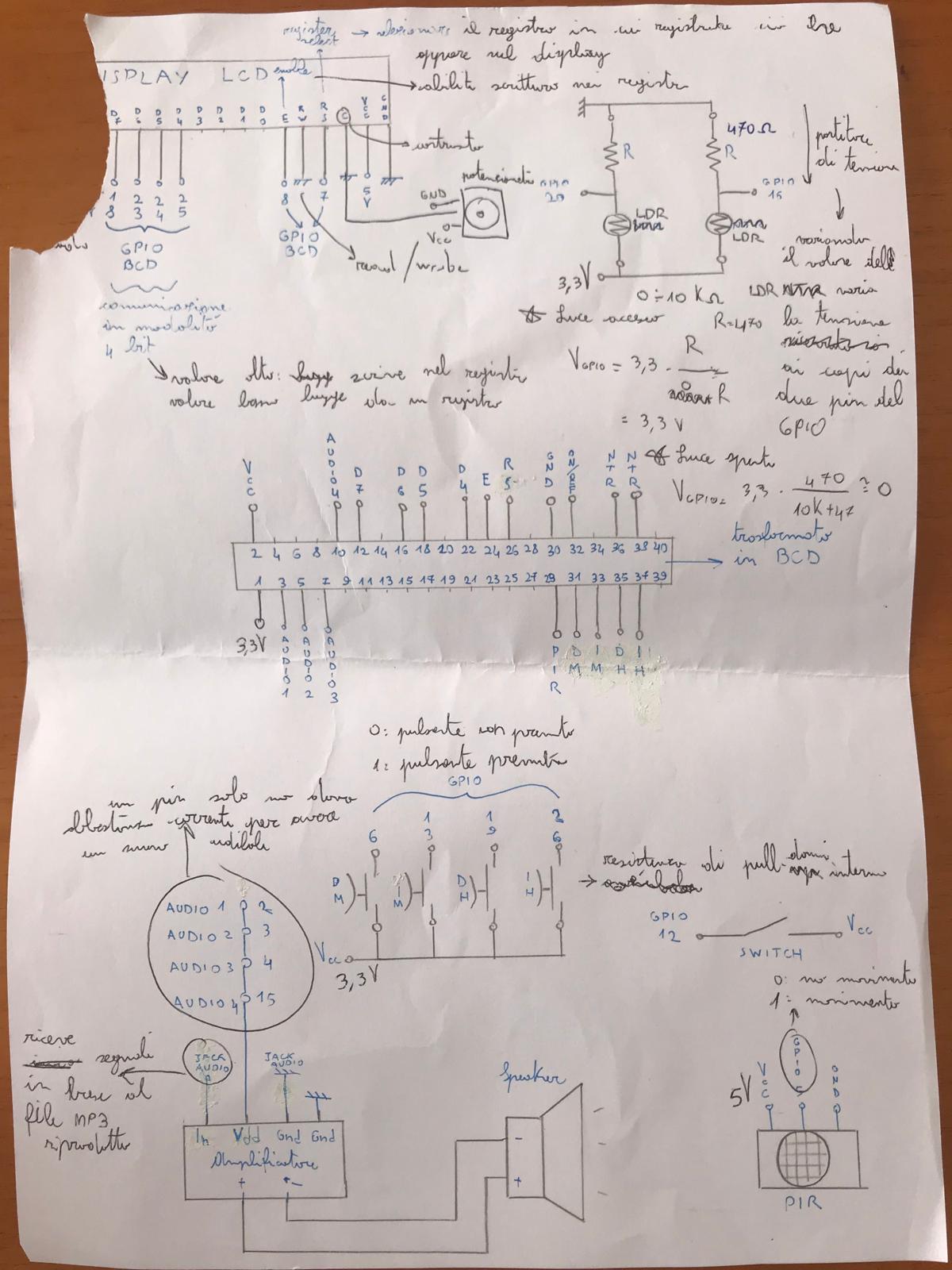
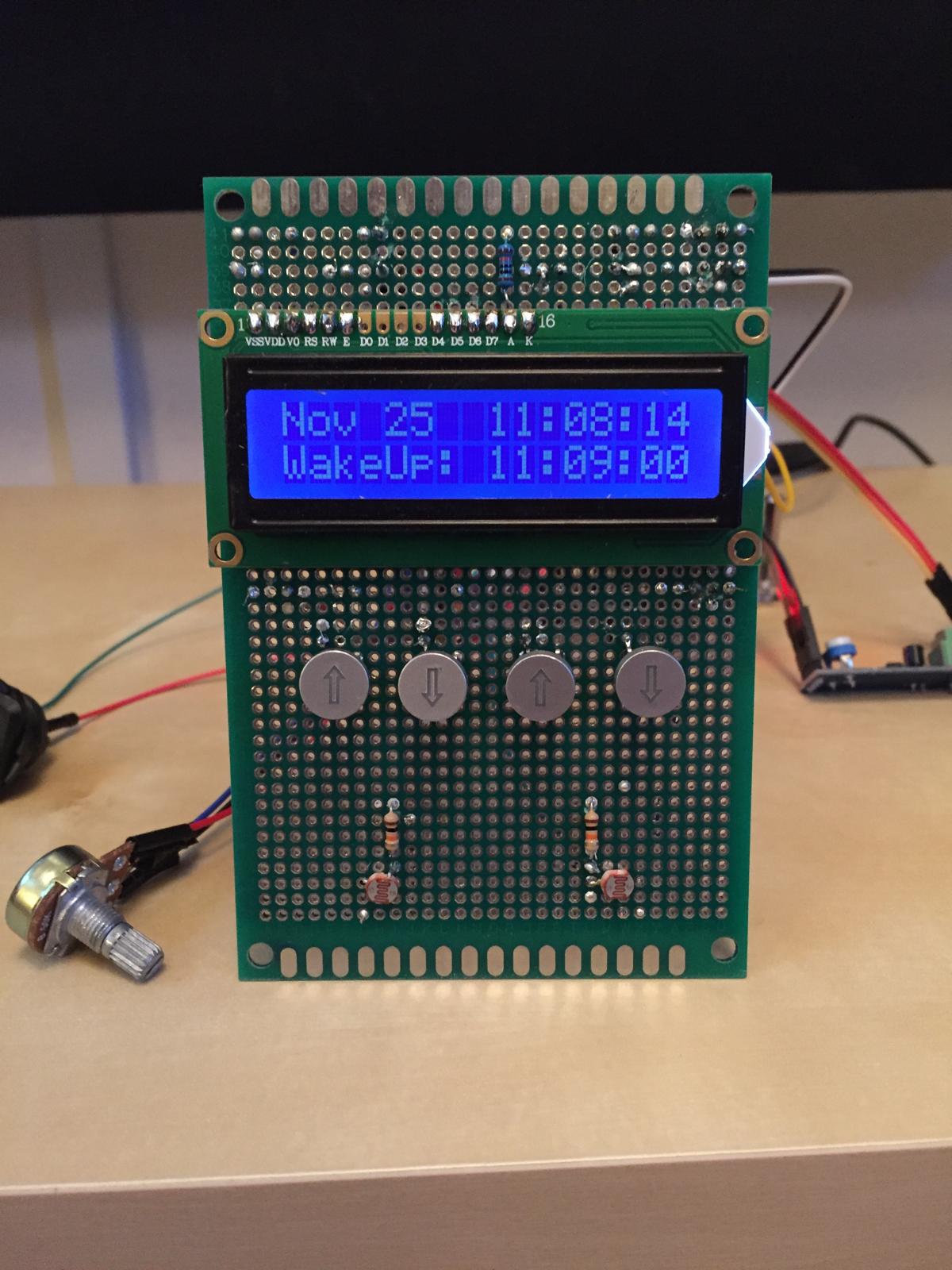
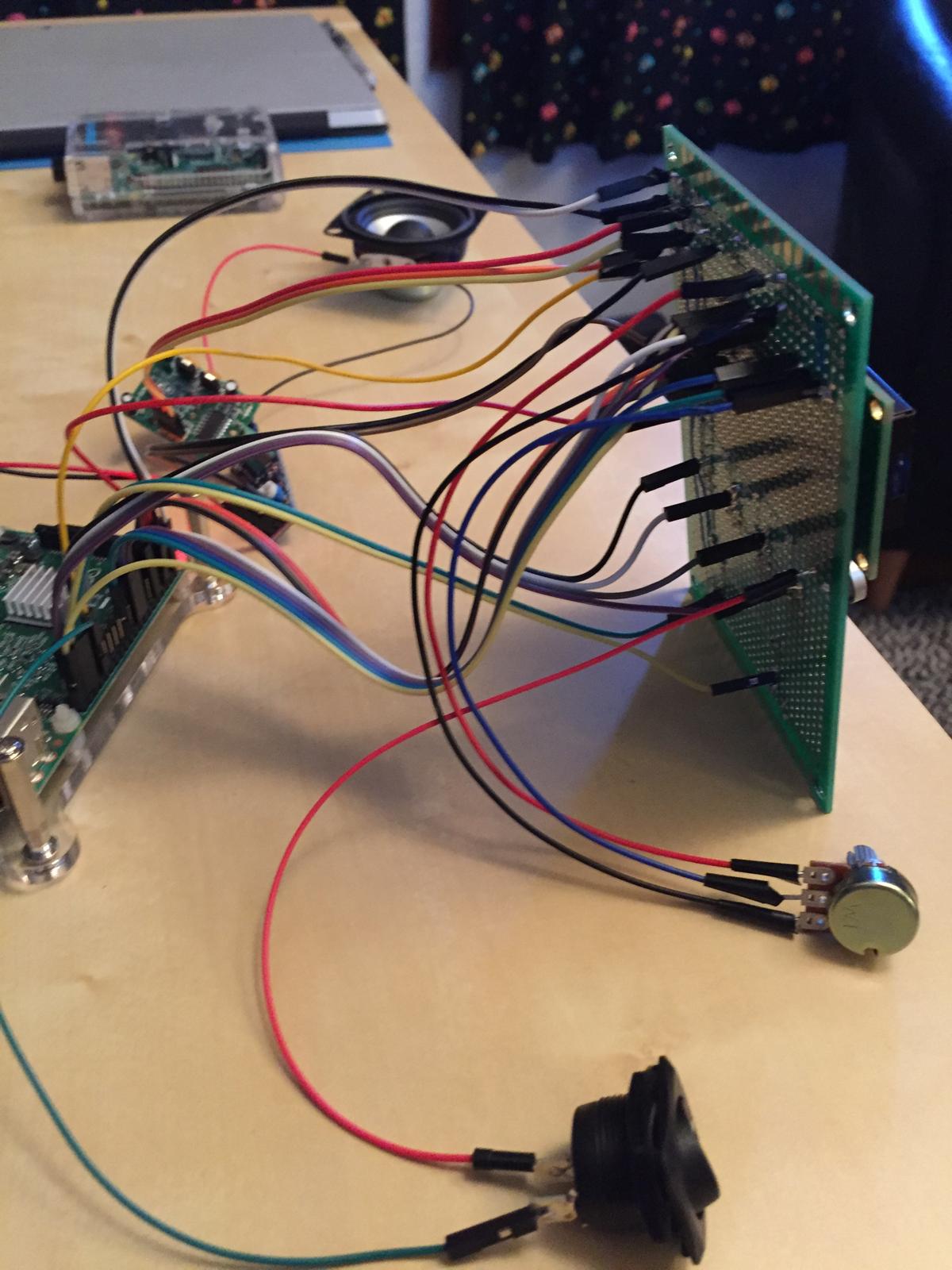
Once everything worked on the breadboard, it was time to solder: the LCD, the four buttons, the photoresistors, and the potentiometer all found their place on a perfboard front panel, wired back to the Raspberry Pi, the amplifier, and the speaker.
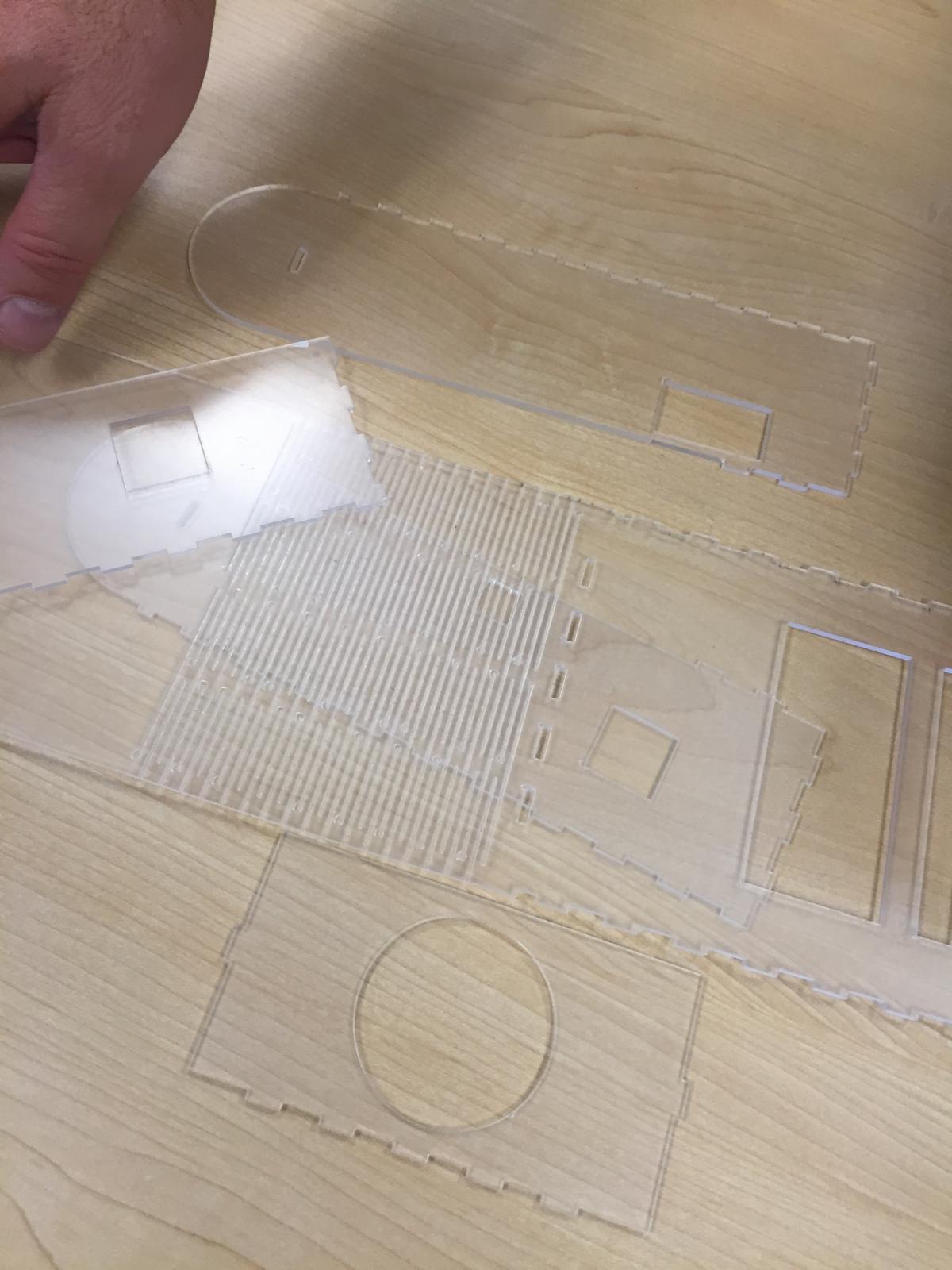
Finally, it was time for the case: my American host dad helped me design it, and Mr. Corey helped me laser-cut it out of a piece of plexiglass during the product design class at Novato High.
Conclusion
What I loved the most about this project is that, before starting, I didn't even know what product design meant. But with a lot of passion and creativity, I managed to find my way to building a real product — without having any idea of how to actually do it.
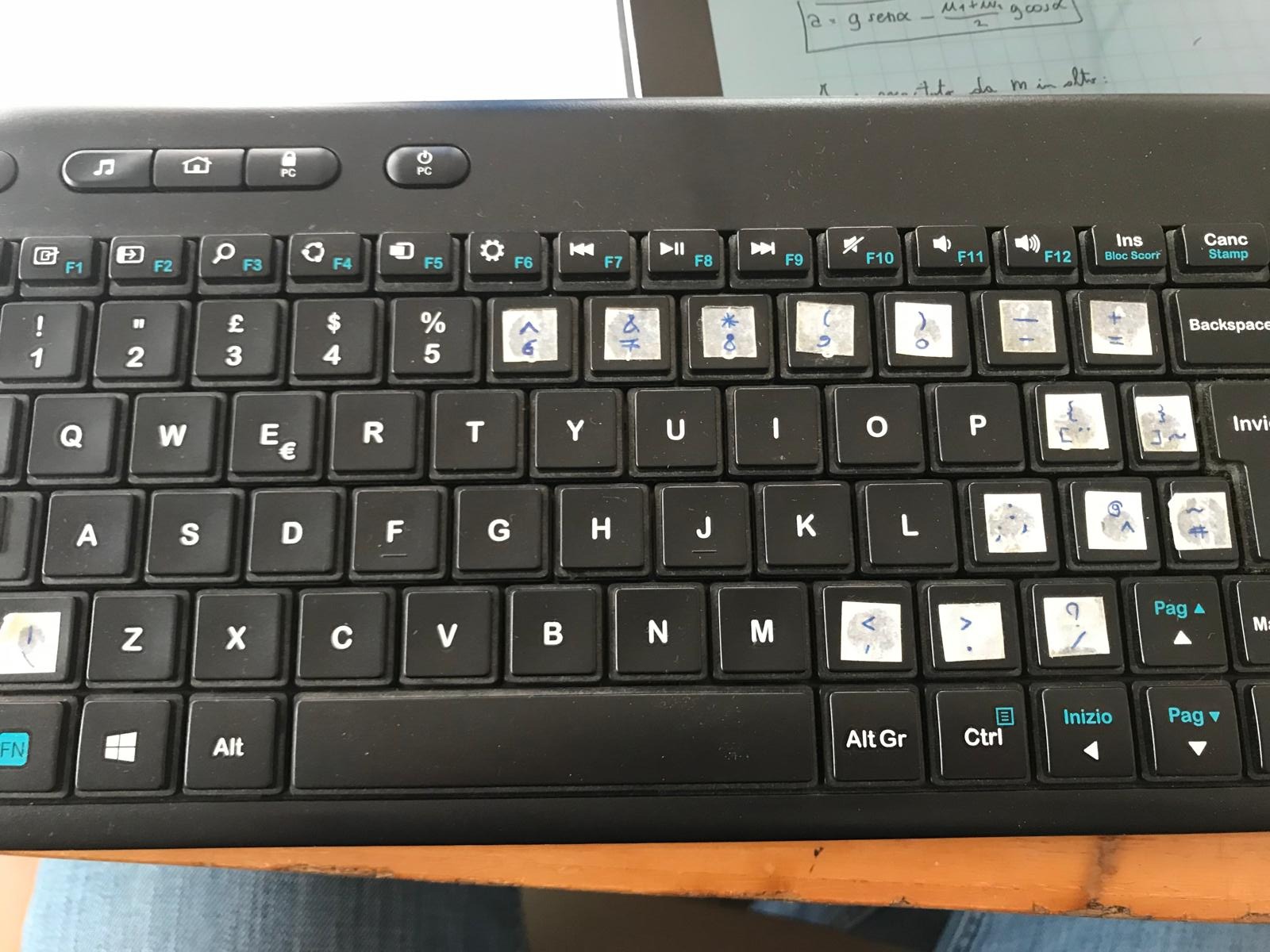
Just to give you an idea of how poor my understanding of basic IT stuff was back then: instead of changing the keyboard layout settings of the Raspberry Pi, I glued little pieces of paper with the American layout onto the Italian keyboard I had brought from home...
I continued using this alarm every day for several years, until I moved to Zurich.