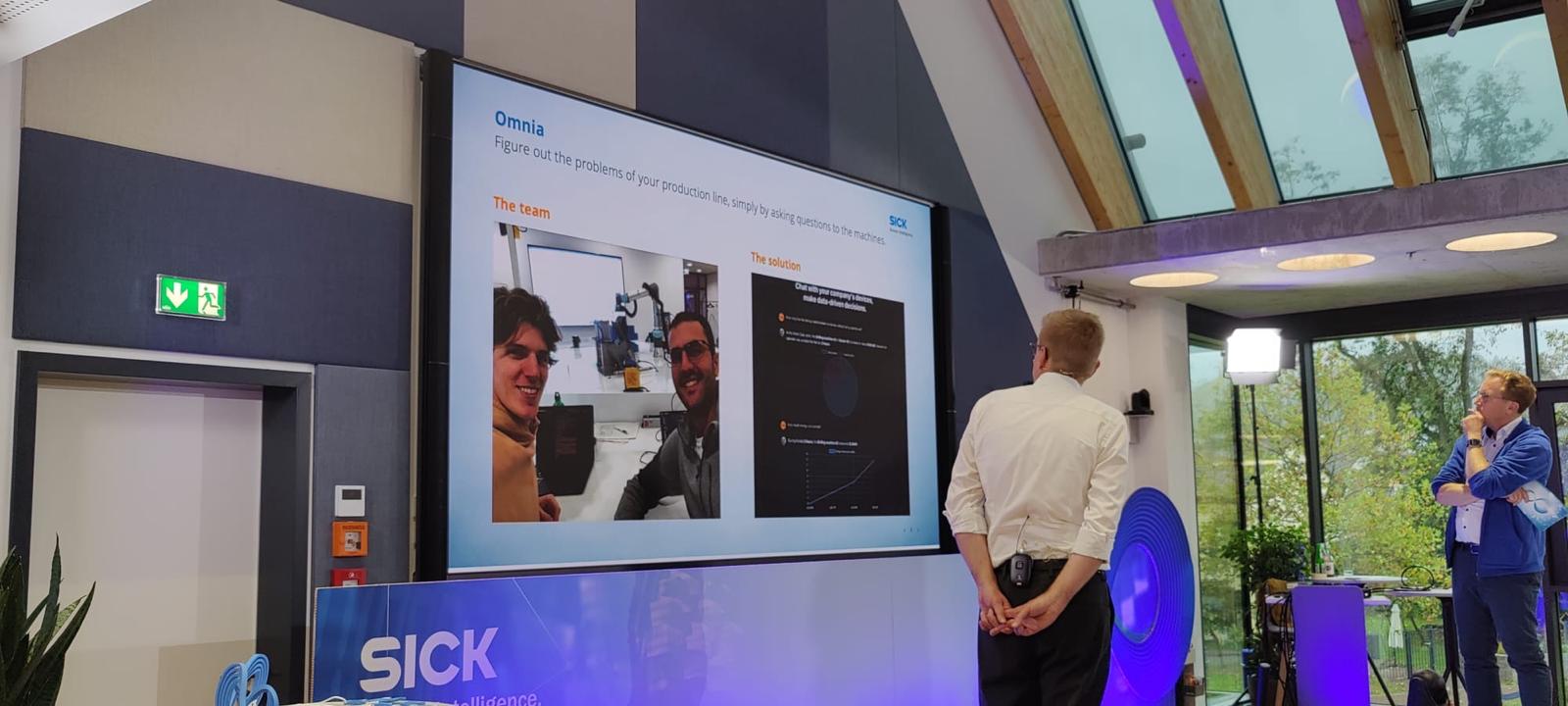
By 2022, before I started my master's thesis [link to come], we were getting more and more serious about building the infrastructure that would let applications seamlessly access the IoT devices they needed via the Web of Things.
The first Zurich meetup
By then, we were starting to get involved in the Web of Things community, and organized the first meetup in Zurich. We were impressed to see that, though the community was quite niche, people came all the way from Munich to attend our presentation:
ChatIoT is born
Then, one day in November 2022, ChatGPT hit the world, and we started playing around with giving ChatGPT access to IoT devices. That's how ChatIoT was born. In a way, we had invented MCP — but limited to IoT devices.
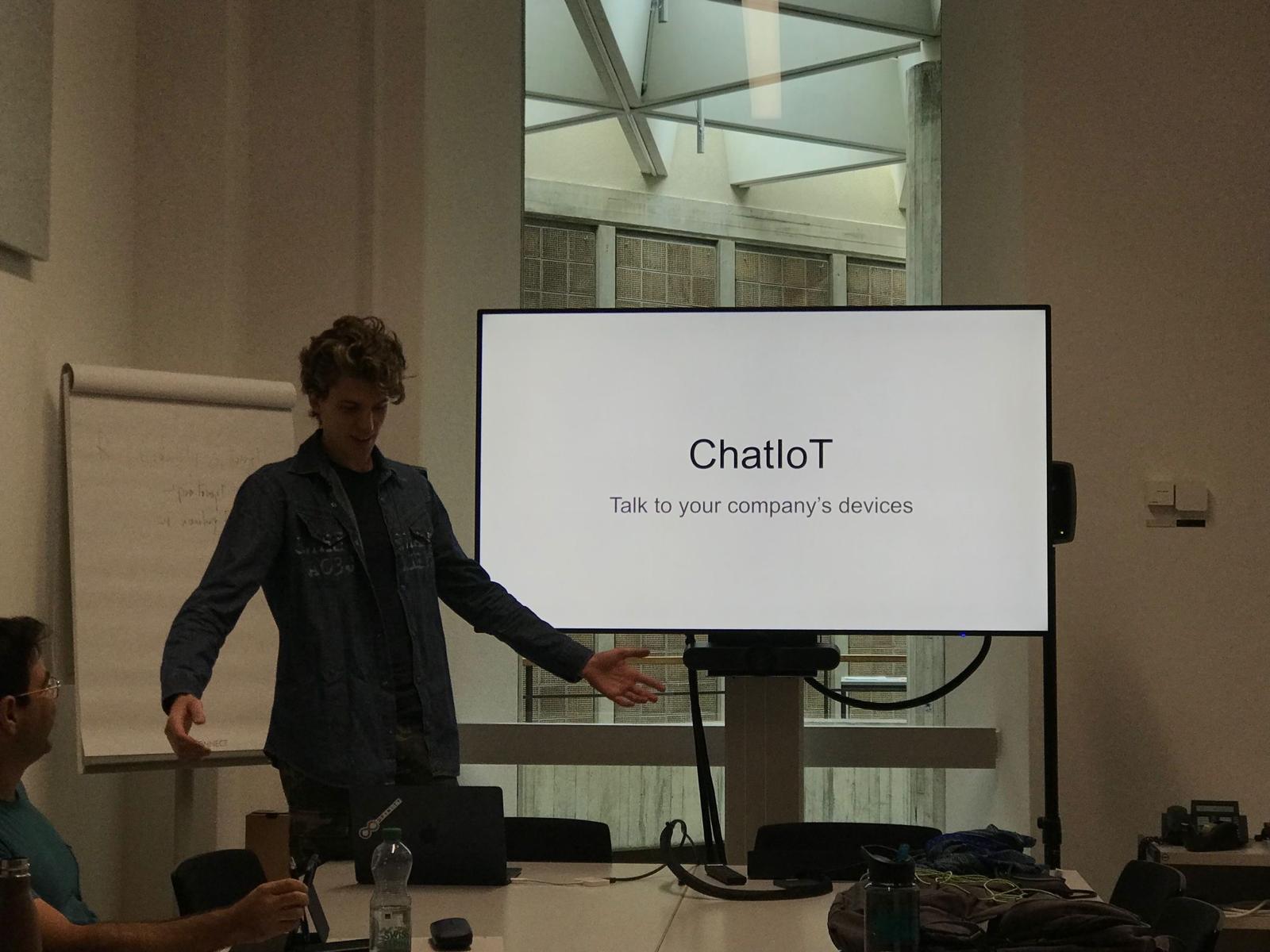
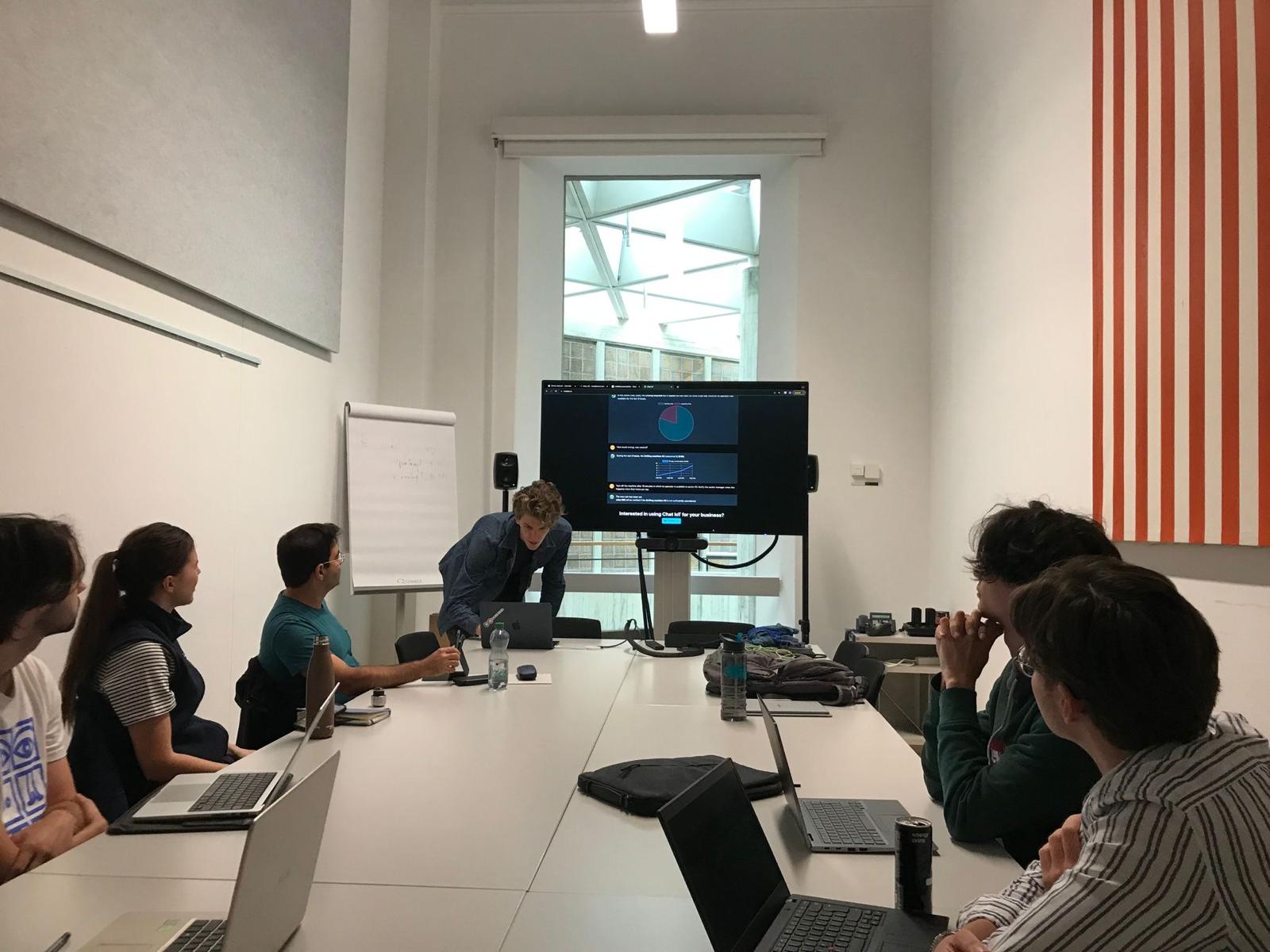
The fact that we could now chat to machines and devices was mind-blowing. With my Learning from Interactions project, devices could observe and learn your preferences; now you could have a full conversation with them. This is what technology that disappears truly meant. We realized that there would be no barriers between man and machine anymore, and we started looking for places that could benefit from this new superpower.
The SICK smart factory
The SICK smart factory seemed like a great place to test this out:
During a few-day hackathon at their headquarters, we turned their (test) production line into Web of Things-enabled devices and connected ChatGPT to Omnia, so that any production-line problem was now one message away.